


The transition from university to clinical practice brings that classic “butterflies in your stomach” feeling when facing your first real Patient. A normal feeling that demonstrates your commitment to the importance of your first dental clinical case.
Implantology is currently experiencing its most mature and stable moment. In recent years, technology has evolved from a mere technical detail to offering greater surgical stability and predictability, transforming the routine of recent graduates.
At S.I.N., we are here to be your Partner on this journey and transform your first dental clinical case with implants into a true success. To help you take this step with total confidence, we’ve prepared this complete guide. Check it out!
1. A detailed anamnesis (Patient history)
When treating patients, it’s normal to focus on assessing the bone or missing tooth, but always remember to look at the Patient holistically. Planning a successful dental clinical case begins by mapping risk factors and health history during the first consultation.
According to the clinical parameters and guidelines established in 1981 (Albrektsson et al., 1981), osseointegration depends on 5 biological factors:
- Implant biocompatibility;
- Implant design for primary stability;
- Surgical care: from torque to temperature control during drilling to prevent bone necrosis;
- Bed quality: bone density;
- Systemic factors: overall health conditions of the Patient’s organism.
That is why conducting a thorough anamnesis on your Patients is so important. It is where you will discover if they smoke — which increases rejection rates by 140% (Mustapha et al., 2021) — or if they have diabetes or bruxism. In addition, it allows you to evaluate:
- General periodontal health: absolute control of biofilm and absence of inflammation in the oral cavity are essential prerequisites before any incision;
- Patient expectations: understanding what they are looking for — aesthetics or functionality — and aligning expectations regarding treatment timeline.
Read also: Dental implants: major advances in implant dentistry over the last 10 years
2. Requesting imaging exams
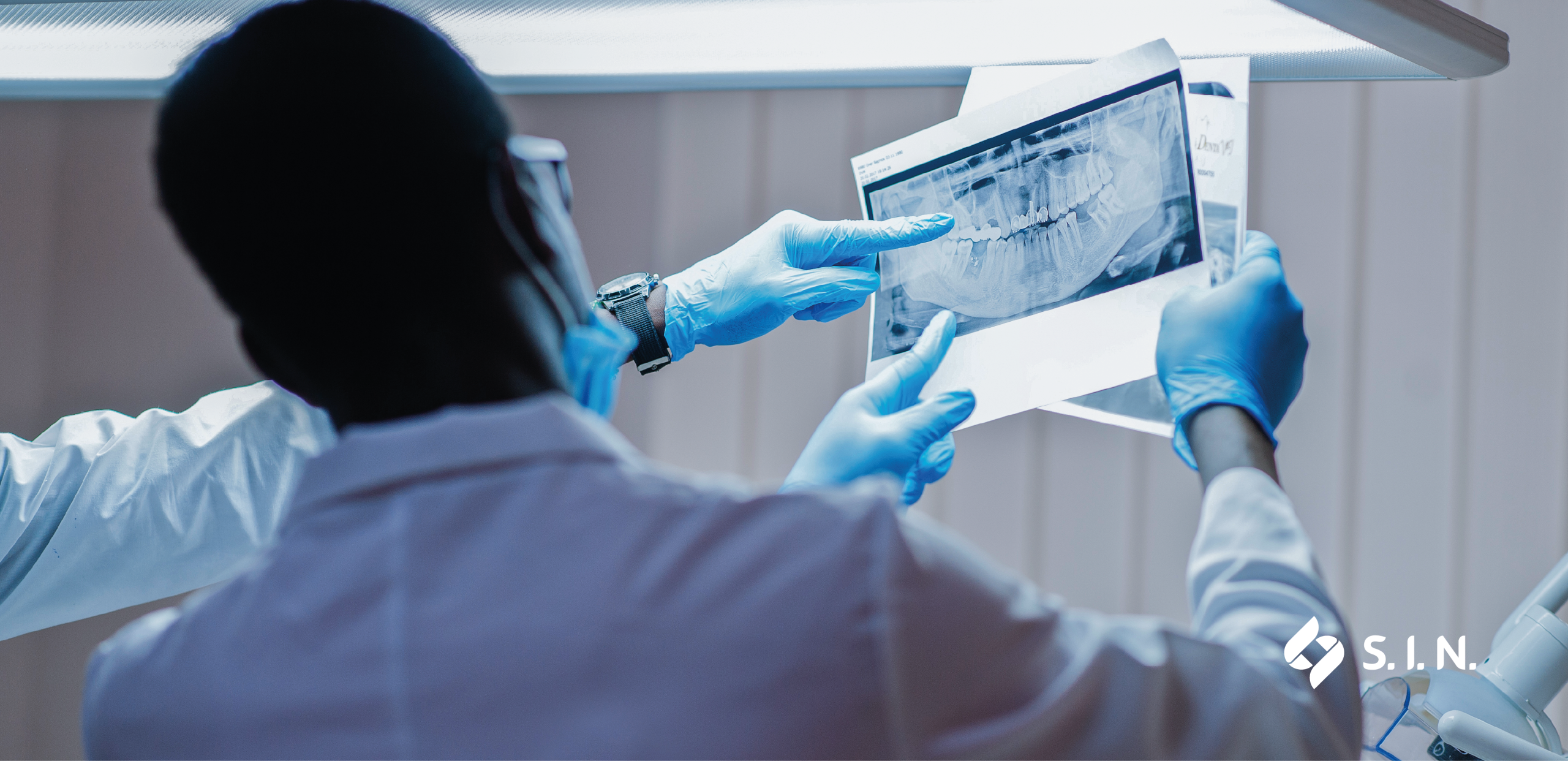
Panoramic X-rays and cone beam computed tomography (CBCT) scans are essential for evaluating the Patient’s bone density and volume, as well as overall oral health. With this information, you can structure a plan with realistic expectations (predictability).

3. The secret of reverse planning and choosing the ideal system
In this step, theory turns into practice by applying reverse planning. There are several ways to create a surgical plan, but by digitally designing the Patient’s ideal smile first and then placing the implant in the exact bone location, you eliminate positioning errors and guarantee a superior aesthetic result.
Furthermore, for those starting their first dental clinical case, choosing components is key. They must be compatible, offer high mechanical efficiency, and achieve a precise fit with the implant connection: the true secret to working with peace of mind.

4. Postoperative care and maintenance
The final step — and often the one that defines the longevity of your success in implantology — is follow-up care. Once the surgery is complete, your role as the Patient’s Partner continues.
A well-guided postoperative process reduces the risk of complications and ensures perfect osseointegration:
- Clear instructions: provide written instructions regarding rest, proper medication, a cold, soft, and liquid diet for the first 48 hours, as well as proper oral hygiene;
- Appointment protocol: schedule the follow-up visit for suture removal (usually 7 to 10 days) and perform periodic radiographic monitoring during healing phases;
- Preventive maintenance: educate the patient on the importance of bi-annual visits. The implant requires ongoing professional prophylaxis to keep peri-implant tissues healthy.
Ready to transform your clinical practice?
Your first dental clinical case with implants deserves the peace of mind, speed, and technology of a brand with over 20 years in the market. Take the first step with someone who simplifies science for you. Schedule a demonstration with our S.I.N. consultants and start transforming smiles with us!
Recapping what we learned in this article:
1. What biological factors should be considered when starting a clinical case?
According to the classic criteria of Albrektsson (1981), success depends on 5 factors: implant biocompatibility, design for primary stability, surgical care with torque and temperature control, bed bone density, and systemic conditions of the Patient.
2. Why is a detailed anamnesis indispensable in planning?
Because it identifies harmful habits and systemic conditions that directly affect healing. For example, smoking Patients have a 140% higher risk of implant rejection (Mustapha, 2021). Anamnesis also allows for evaluating periodontal health and aligning Client expectations.
3. What is the advantage of reverse planning for recent dental graduates?
Reverse planning flips traditional logic: first, the Patient’s ideal smile and prosthesis are designed in the software, and from there, the millimeter-precise surgical position of the implant is defined. This eliminates tilt errors and guarantees a superior aesthetic result in your dental clinical case.
4. What should be done after the surgical stage to guarantee treatment success?
It is necessary to establish a strict postoperative protocol (with written instructions for rest, diet, and hygiene), schedule appointments for suture removal and osseointegration monitoring, and raise Patient awareness about the importance of bi-annual preventive maintenance visits.