


Implant dentistry has reached its most mature and predictable stage. Looking back at the dental implant market a decade ago, the landscape has completely transformed. What was once focused solely on the mechanical replacement of a missing tooth has evolved into an integrated ecosystem connecting cutting-edge engineering, biology, and well-being.
For the dental surgeon, the daily focus has shifted from surgical uncertainty to high clinical predictability. For Patients, the benefit is even deeper: the opportunity to regain essential functions like eating and speaking, restoring self-esteem and social confidence. Over the past 10 years, technology has evolved from being a mere technical detail to serving a greater purpose—connecting people through care and respect for life.
The Journey of Innovation: Building Greater Clinical Predictability in the Dental Office
The past decade has accelerated the transition from analog dentistry to the cutting-edge digital era, optimizing chair time and delivering an international standard of excellence.
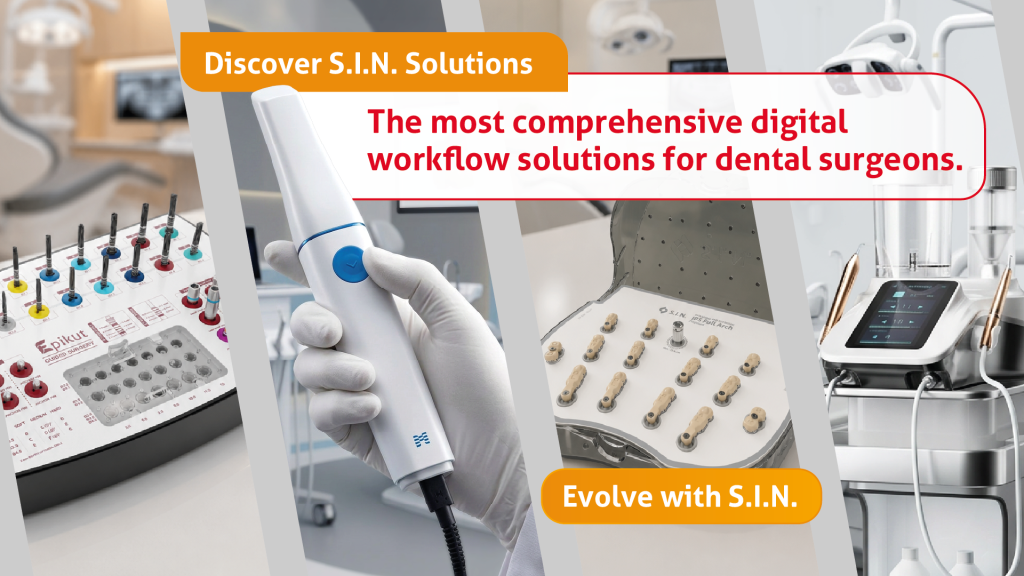
The boom in digital workflows and reverse planning in implant dentistry
Although the first intraoral scanner in history was developed in the 1980s by Dr. François Duret (with the pioneering CAD/CAM system), it was in the last decade that this technology became widespread and achieved maximum micrometric precision.
Advances in computed tomography software and intraoral scanning have solidified reverse planning. Instead of adapting the prosthesis to an already placed dental implant, the dentist reverses the traditional approach: first digitally designing the Patient’s ideal smile, and then positioning the implant in the exact bony site, eliminating positioning errors and aesthetic flaws.
The era of guided surgery: less invasive, more precise
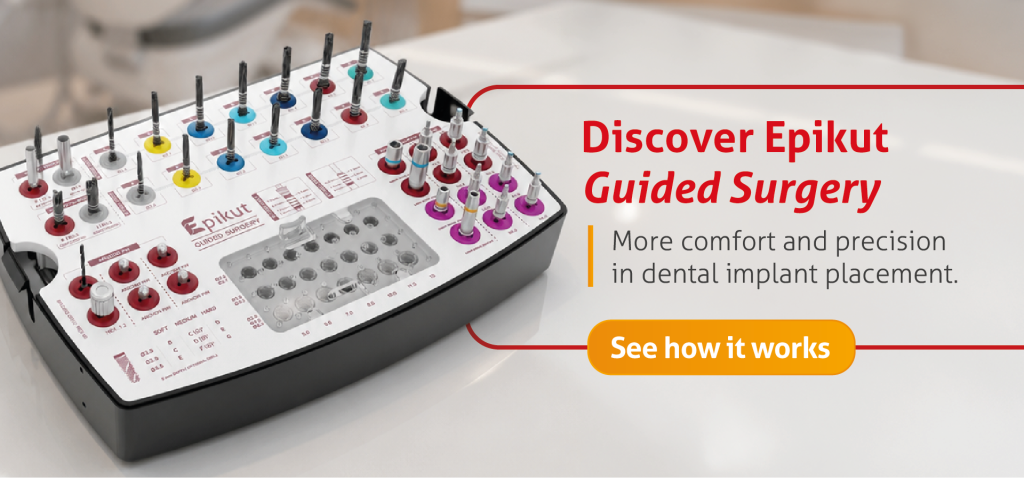
Software developments have driven the advancement of guided surgery through high-fidelity prototyped guides. Market data indicate that this technique reduces surgical time by up to 30% compared to the traditional freehand approach.
By using modern systems with narrow rings that prevent collisions in confined spaces, the dentist achieves greater accuracy and preserves soft tissue and bone volume surrounding the dental implant site. This results in a much faster and more comfortable postoperative recovery for the Patient.
Intelligent macrogeometries and safe immediate loading
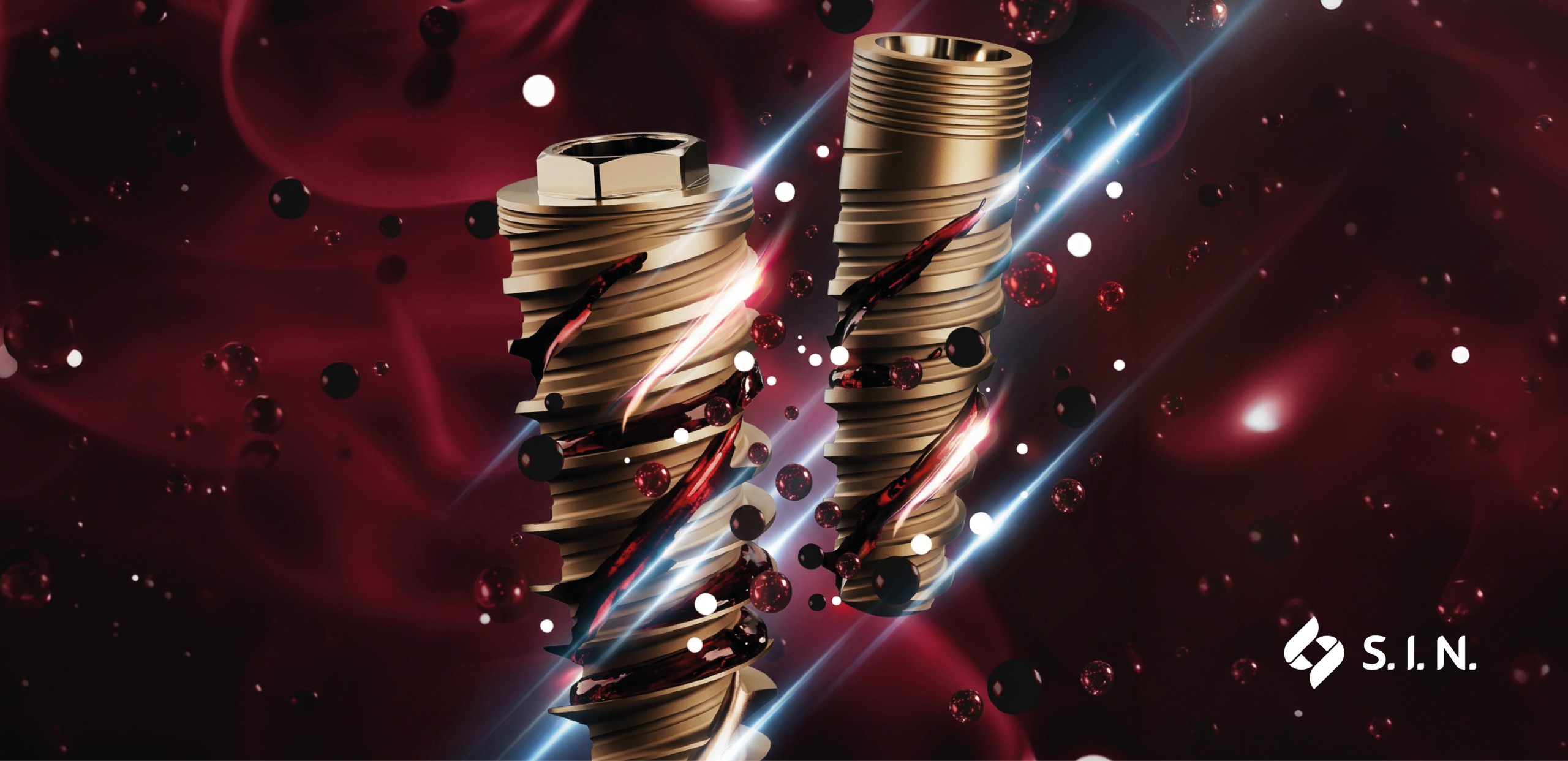
Historically, conventional protocols required passive healing periods of 4 to 6 months before subjecting the implant to occlusal forces. Over the past 10 years, the development of hybrid macrogeometries—combining cylindrical bodies with conical apices and double threads with inverted support—has transformed this reality. This sharp, compressive design better distributes forces in the cervical region and ensures high immediate primary stability for the dental implant (with recommended torques between 45 N·cm and 80 N·cm). This allows for non-functional temporary prosthetic loading within 72 hours, restoring the Patient’s smile on the very same day.
The Gold Standard in Biology: The Surface Nano Revolution
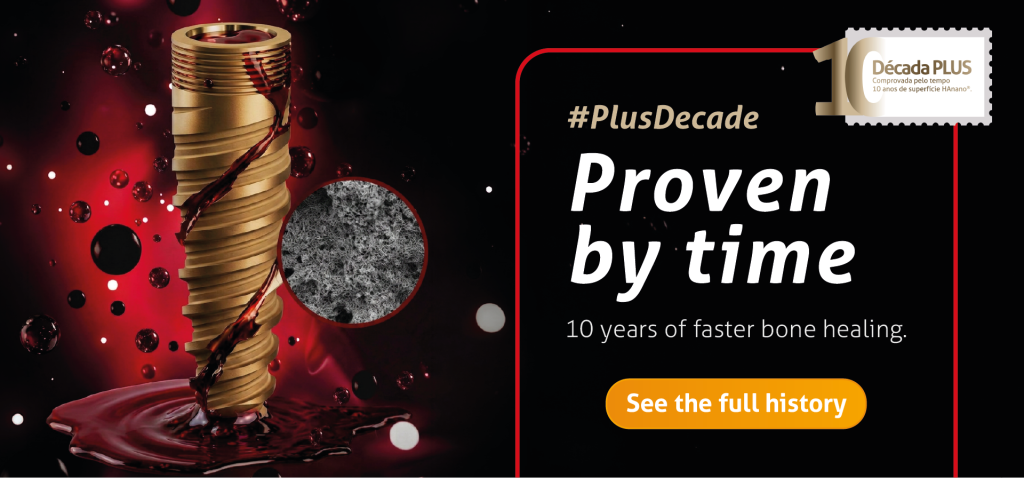
While macrogeometric design solved the mechanical locking of dental implants, molecular engineering over the past 10 years has addressed the biological challenge of accelerated healing. The greatest milestone in this transformation was the introduction of Surface Nano to the implant dentistry market.
Developed from research that began in 2005 at leading universities in Gothenburg, Sweden, Surface Nano surpassed conventional sandblasted surfaces by introducing pure hydroxyapatite nanocrystals (the main mineral found in human bone)—just 20 nanometers thick—homogeneously sintered onto micro-roughened titanium.
Numerous internationally recognized scientific publications, such as the studies published by Bezerra F. et al. (2017) and Silva R.A. et al. (2020), confirm the biological impact of this technology:
🧑🏽⚕️ Read the full scientific articles:
- Superhydrophilicity: The nanometric layer alters the surface energy, causing the implant to attract blood immediately after insertion.
- Activated signal transduction: In vitro studies demonstrate a significant increase in the concentration of proteins involved in the wound healing signal transduction cascade, optimizing interaction with pre-osteoblastic cells.
- Accelerated mineralization: Clear biological signaling significantly increases vital osteogenic markers, such as alkaline phosphatase and osteocalcin, resulting in bone with superior nanomechanical properties forming around the implant.
This advancement has brought professional pride and complete clinical confidence to the Clientes, transforming complex laboratory data into an invaluable human benefit: the Patient’s return to their routine of eating, socializing, and smiling much more quickly and predictably following dental implant placement.
Dentistry has taken a giant leap forward in the last decade because it chose to put people and care before products. At S.I.N., supporting the evolution of your practice through uncomplicated science is the commitment that guides our history.
Recap
1. What were the most significant developments in the dental implant market over the past 10 years?
The main highlights were the complete digitization of clinical routines, including reverse planning and intraoral scanning. The precision of software-guided surgery and high-torque compression implants for safe immediate loading also stood out, along with the development of bioactive nanosurfaces that accelerate the Patient’s cellular response.
2. How does the Surface Nano of S.I.N. implants work?
Surface Nano applies pure hydroxyapatite nanocrystals with a stable thickness of 20 nanometers onto micro-roughened titanium. This Swedish-developed structure imparts superhydrophilic properties to the implant, attracting blood and stimulating the biological markers that accelerate bone formation.
3. What is reverse planning in digital implant dentistry?
It is a modern protocol where rehabilitation is planned from back to front. Using intraoral scanning and computer graphics, the dentist first designs the Patient’s ideal prosthesis digitally and then defines the exact surgical placement of the implant based on the desired final aesthetic result.
4. What are the advantages of immediate loading in low-density bone?
Thanks to progressive cutting geometric designs and dual compressive threads, it is possible to achieve high primary stability even in soft bone or post-extraction sockets. As a result, the Patient can receive a temporary prosthesis within 72 hours with complete safety and predictability.