

Performing a procedure with dental implants with bone loss at a severe level represents one of the most complex scenarios in the daily routine of implantology practices. Fear, insecurity, and the Patient’s false belief that a lack of bone structure makes treatment impossible keep a large portion of the public away from dental offices. Many end up living for years with the discomfort of unstable prostheses or missing teeth, unaware that placed dental implants with bone loss are a predictable and safe clinical reality when proper anchoring strategies are used.
In this context, the role of the Dental Surgeon goes far beyond technical execution: they act as a strategic and humanized Partner. Their mission is to demystify the treatment, transforming scientific concepts and complex anatomies into clinical safety and predictability.
Showing the Patient that bone resorption does not necessarily rule out treatment — depending on the analysis and evaluation of the Dental Surgeon —, but is rather the starting point for modern anchorage techniques, restores the confidence needed for them to smile again.
Advanced rehabilitation techniques in atrophic maxillas and mandibles
In the face of severely resorbed ridges, modern implantology offers proven clinical alternatives to bypass or reconstruct the bone structure:
- Bone grafts: Indicated for tissue and volume reconstruction in atrophic beds. However, depending on the degree of atrophy, they may require multiple procedures and a prolonged waiting time until the final prosthesis is delivered.
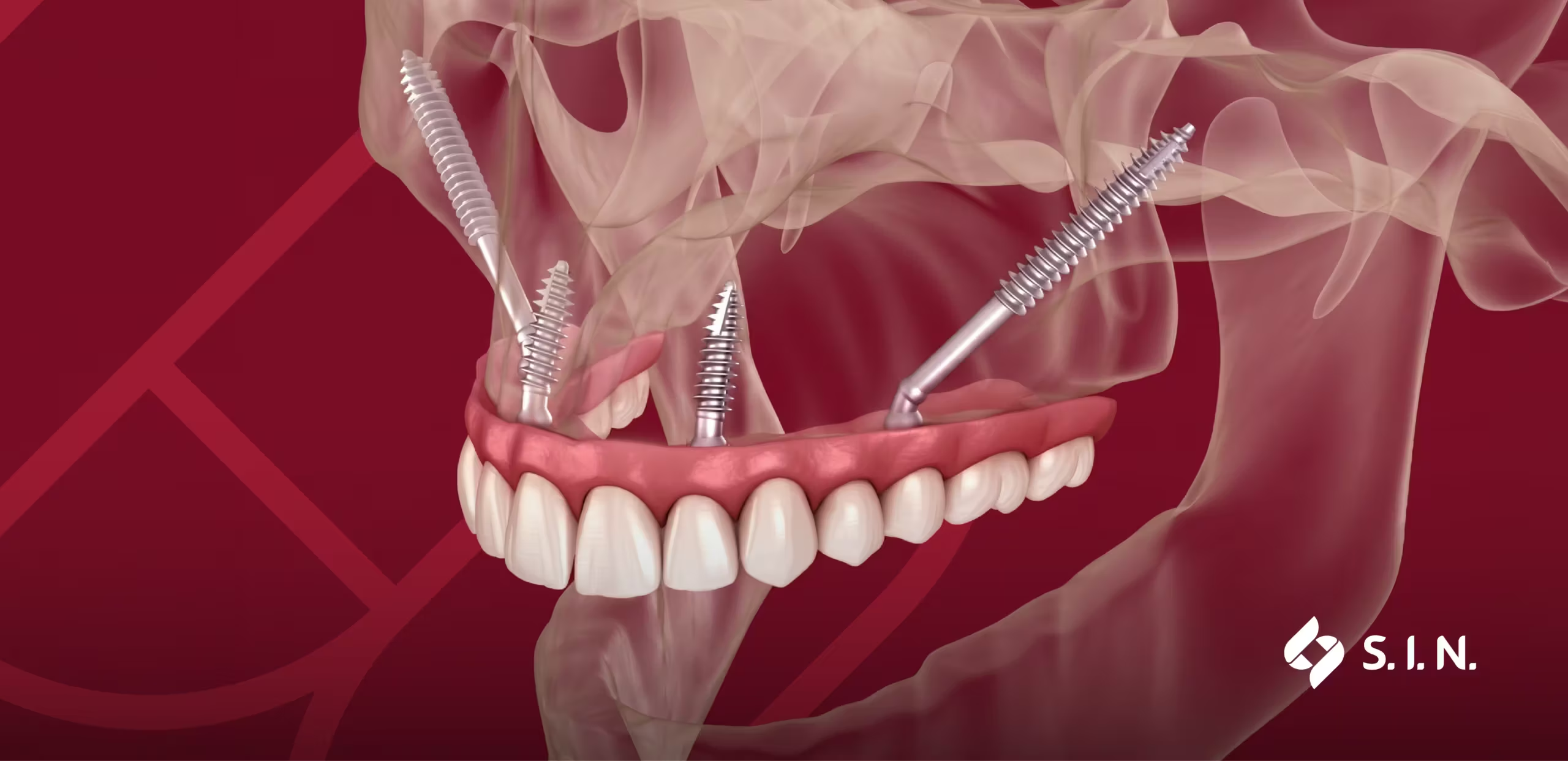
- Tilted implants: Allow anchorage in residual native bone, such as canine pillars and anterior regions, bypassing anatomical landmarks like the maxillary sinus. This approach makes better use of the remaining anatomy and frequently enables protocols without the need for grafting (such as All-on-4 techniques).
- Zygomatic implants: Emerged as an alternative for specific cases of severely resorbed maxillas where there is no residual alveolar bone in the posterior or anterior region. This technique enables remote anchorage in the body of the zygomatic bone, creating pathways where complex grafts are not required and helping reduce total treatment time, keeping in mind that everything depends on the professional’s planning.
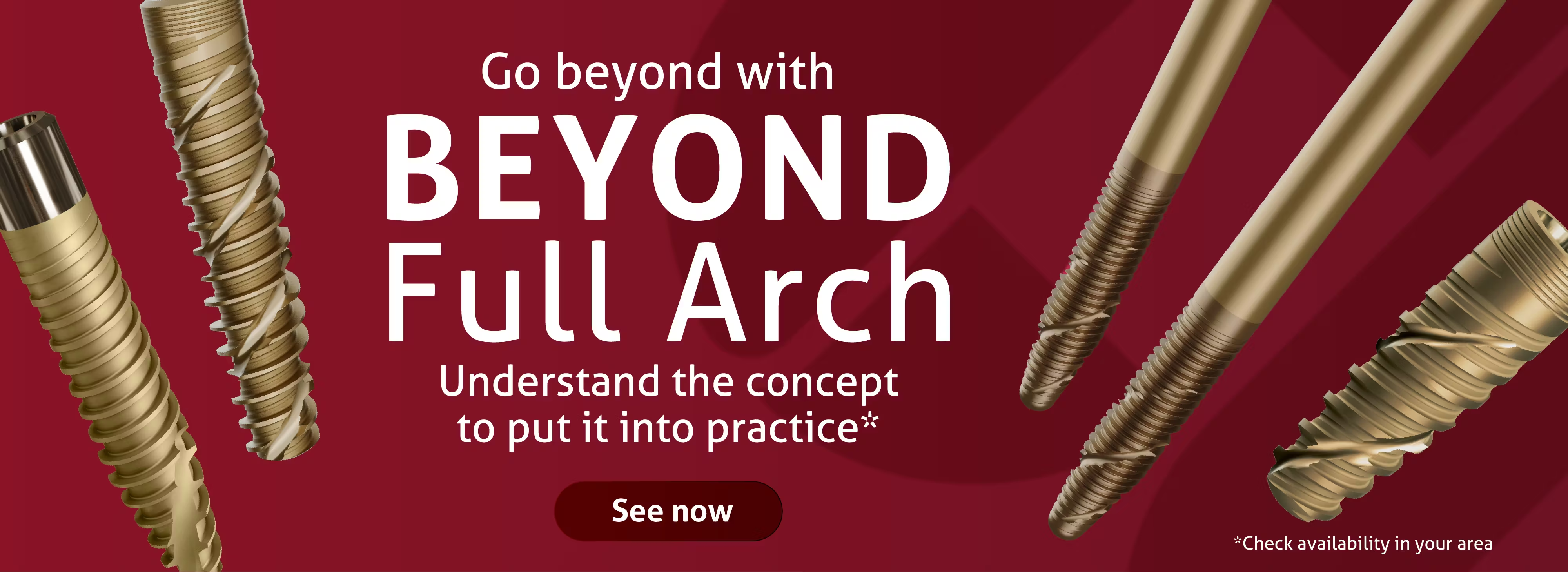
Beyond Full Arch concept and the bioactivity of Plus Surface
The Beyond Full Arch is an integrated technique concept that unites science, high-precision engineering, and digital planning to transform complex full-arch cases into predictable, fast, and humanized treatments.
In short, it is a philosophy that offers the Dental Surgeon freedom of choice to rehabilitate in immediate loading through remote anchorage.
S.I.N. Solutions applied to the concept
To turn the complexity of atrophic maxillas and mandibles into predictable procedures, S.I.N. developed a high-technology portfolio focused on high primary stability and accelerated biological response.
Combining precision engineering, smart design, and surface biotechnology, Beyond Full Arch solutions offer the versatility and safety necessary for the Dental Surgeon to execute full-arch rehabilitations in immediate loading with clinical freedom of choice. Discover the implants that integrate this ecosystem:
Epikut S and Epikut S Long
Both models feature compressive geometry, sharp threads, and a tapered design, assisting in primary stability and support for immediate loading. However, they meet specific indications:
- Epikut S: Primarily indicated for low-density bone (types III and IV) and post-extraction sockets.
- Epikut S Long: Specifically developed for multiple rehabilitations in fully edentulous maxillas, allowing extended anchorage in regions with better bone density and distal anatomical pillars.
Zygomatic Plus
Specifically designed for anchorage in the body of the zygomatic bone in cases of extreme atrophy. It features a tissue-friendly cervical design to protect peri-implant soft tissues and prevent long-term tissue deficiencies. Available in a 16° Morse Taper connection, it helps optimize clinical time and occlusal load distribution.
Plus Surface
Composed of a layer of hydroxyapatite nanocrystals — only 20 nanometers thick — sintered onto titanium. Highly hydrophilic, Plus Surface accelerates the early stages of osseointegration, supporting a fast biological response even in low-density bone beds.
Please note: You should check whether these solutions are available in your region. To do so, please contact our specialists.
Also read: S.I.N. Plus HAnano Surface: the science behind accelerated osseointegration and clinical success
The role of digital workflow in planning and practice profitability
The integration of Cone Beam Computed Tomography (CBCT) and intraoral scanning allows for computer-guided backward planning in cases of severe bone loss. Through the software, the Dentist projects the ideal position of the prosthesis even before surgery, precisely determining the angulation and path of the implants.

Benefits for clinical practice
Adopting the digital workflow, combined with Beyond Full Arch solutions, goes beyond purely technical gains, generating a direct impact on the practice’s operational efficiency and Patient satisfaction.
By replacing empirical approaches with precise, computer-guided backward planning, the Dental Surgeon elevates the standard of their treatments, combining surgical safety with a profitable and attractive business model.
Discover the main impacts of this approach in daily clinical practice:
- Surgical time: Guided and pre-planned drillings increase assertiveness and help minimize the risk of anatomical deviations or invasion of vital structures.
- Surgical and prosthetic predictability: Passive fit of the prosthesis and component emergence profile are adjusted during the digital design phase, increasing success rates.
- Increased profitability and perceived value: By offering complete rehabilitations in immediate load, the practice reduces the number of appointments, optimizes the Surgeon’s schedule, and provides the Patient with a comfortable experience, turning intimidating cases into high-value competitive differentiators.
The solution can be within your reach with S.I.N.
When rehabilitating atrophic Patients, you are restoring their masticatory function, facial aesthetics, self-esteem, and the pleasure of smiling.
With robust scientific grounding, digital workflow, and the synergy of Beyond Full Arch integrated solutions, the Dental Surgeon gains the predictability required to turn challenging cases of severe resorption into safe, efficient, and rewarding clinical routines.
What we covered in this article:
1. Can you get dental implants with bone loss?
Yes. Many Patients ask: “can you still get dental implants with bone loss?” Severe bone resorption does not make treatment impossible. Modern implantology offers advanced alternatives to bypass or reconstruct the atrophic structure, allowing implant anchorage and functional as well as aesthetic rehabilitation with prostheses, including immediate loading protocols.
2. What are the main techniques for rehabilitating Patients with atrophic arches?
Clinical approaches vary according to Patient needs. Bone grafts can be used for tissue reconstruction, although they require longer waiting times, or tilted implants can be used to leverage residual native bone and bypass anatomical landmarks without grafting.
For extreme atrophy cases, zygomatic implants are one of the key alternatives. This technique enables remote anchorage in the body of the zygomatic bone, eliminating the need for complex grafts and helping reduce overall treatment time, keeping in mind that everything depends on the professional’s planning.
3. What is the Beyond Full Arch concept and which products compose it?
Beyond Full Arch is an integrated technique philosophy uniting science, precision engineering, and digital planning to rehabilitate full-arch cases in immediate load through remote anchorage. Its ecosystem includes the Epikut S and Epikut S Long tapered implants for stability in low-density bone, the Zygomatic Plus implant designed for anchorage in the zygomatic bone, and Superfície Plus biotechnology.
4. How does Plus Surface assist in the osseointegration process?
Plus Surface features a layer of hydroxyapatite nanocrystals sintered onto titanium at just 20 nanometers thick. Its highly hydrophilic property accelerates the early stages of osseointegration, assisting in an accelerated, high-quality biological response even in low-density bone beds.
5. What is the role of digital workflow in planning and practice profitability?
By integrating Cone Beam Computed Tomography with intraoral scanning, the Dental Surgeon performs computer-guided backward planning, establishing prosthesis placement and implant angulation before surgery.
This reduces surgical time through guided drilling, ensures high predictability in prosthetic seating, and boosts practice profitability by helping decrease appointment counts and delivering fast, high-perceived-value treatments (Oliveira, 2025).