



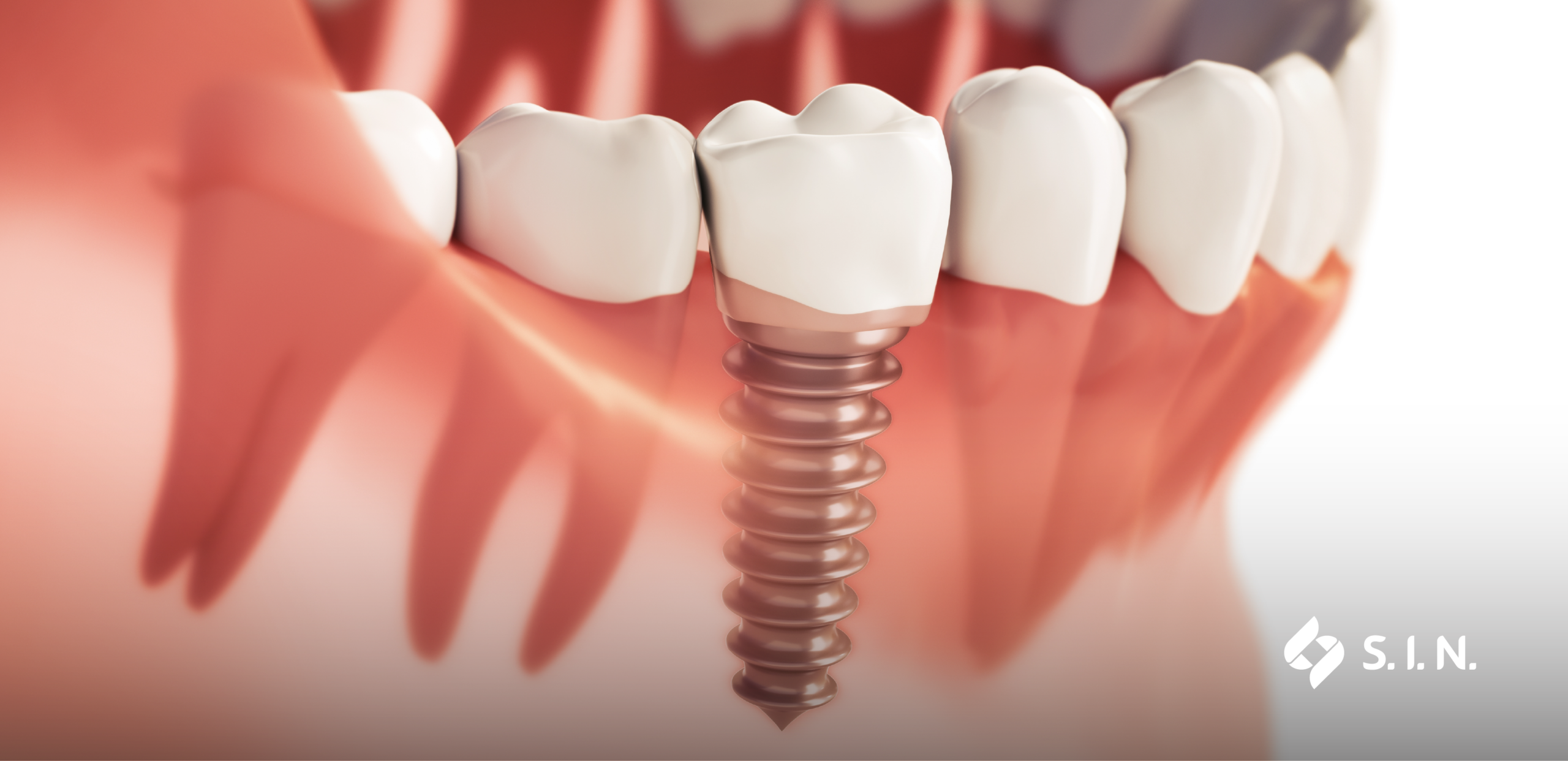
Implantology has evolved significantly, establishing itself as one of the most predictable specialties in dentistry. However, understanding dental implants failure is essential for maintaining high success rates in clinical practice. Even in well-planned procedures, complications can occur, affecting the Patient both functionally and emotionally.
Loss of an implant impacts aesthetics, masticatory function, and Patient self-esteem. For the Surgeon-Dentist, knowing what leads to this loss is just as crucial as mastering the most advanced surgical techniques.
While clinical protocols increase success rates, absolute predictability depends on multiple factors. The causes behind dental implants failure extend beyond surgical execution; Patient habits, systemic conditions, and biological responses play a major role.
Let us explore the scientific and clinical factors behind implant loss and how to prevent them effectively.
Real market numbers: What science shows us
When examining international scientific literature, long-term implant survival rates exceed 90% over a 10-year follow-up period (Howe, 2019; Internal Data S.I.N.).
However, real-world clinical data provides even deeper insights. Post-market surveillance conducted by S.I.N. in partnership with the Fluminense Federal University (UFF) — the PMCF Project — evaluated over 1,000 implants across diverse clinical scenarios, including low-density Type IV bone and bone grafting procedures. The study demonstrated a 99% success rate.
These results prove that precise surgical planning combined with high-performance implants ensures safety and predictability in daily practice.
Demystifying the “rejection” myth
Patients often express fear that their body will “reject” the implant. Here, the Surgeon-Dentist plays a key role as a trusted Partner in reassuring and educating the Patient.
Titanium and auxiliary components developed by S.I.N. (such as PEEK, polyacetal, and acrylic) are highly biocompatible, supporting natural osseointegration.
When an implant fails, rejection is not the cause. Instead, failure stems from surgical, biological, biomechanical, or systemic factors.
Read also: The clinical principles and applications of Guided Bone Regeneration
Early vs. late implant failure: Identifying the timing and signs
Recognizing the signs of dental implant failure depends on when the issue occurs. Clinical evidence categorizes losses into two main phases:
1. Early failure (before prosthetic loading)
Occurs during the initial months post-surgery when osseointegration fails to consolidate, leading to fibrous encapsulation around the fixator. Key triggers include:
- Thermal trauma: Overheating of the bone during drilling.*
- Mechanical compression: Excessive pressure on thin bone ridges.*
- Low primary stability: Insufficient torque during placement, especially in immediate loading protocols where a minimum torque of 45 N.cm is required.*
- Surgical site contamination: Bacterial interference during placement.*
*Source: Coelho & Jimbo, 2014 | Pessoa, 2020 | Berglundh, 2001 | Ganz, 2024.
2. Late failure (after prosthetic placement and function)
Late failure occurs months or years after rehabilitation, when the Patient is already using the restoration. Observing dental implant failure after 10 years or more is rarely linked to material degradation or titanium defects. Instead, late losses stem from ongoing oral environment factors:
- Biological factors: Biofilm accumulation leading to peri-implant mucositis or peri-implantitis (progressive bone loss).*
- Biomechanical factors: Occlusal overload and uncontrolled masticatory forces, such as bruxism.*
*Source: Pessoa, 2020 | Bonfante, 2024.

Causes of dental implant loss and how to prevent them
Most complications leading to dental implants failure can be avoided through rigorous clinical planning, precise surgical execution, and Patient education.
1. Lack of 3D planning and freehand surgery
Relying solely on 2D panoramic radiographs limits visibility of bone width and anatomical structures. Freehand drilling increases the risk of angulation errors and postoperative discomfort.
Prevention: Adopt a digital workflow. Combining Cone Beam Computed Tomography (CBCT) with intraoral scanning and reverse planning provides full 3D visualization. Guided surgery standardizes procedures, making surgeries faster, more precise, and predictable.
2. Patient habits and systemic health
Systemic health directly influences bone healing around the implant:
- Smoking: Impairs blood circulation in peri-implant tissues, increasing failure risks significantly (Naseri, 2020; Bonfante, 2020).
- Uncontrolled diabetes: Delays tissue repair and elevates complication rates. However, Patients with controlled diabetes achieve success rates between 96.1% and 97.3%, comparable to healthy Patients (James, 2024).
- Osteoporosis and bisphosphonates: Osteoporosis may accelerate marginal bone resorption over time, while bisphosphonate therapy requires careful evaluation to avoid osteonecrosis.(Pessoa, 2020).
3. Bruxism and occlusal overload
Unlike natural teeth, implants lack a periodontal ligament to cushion masticatory forces. Uncontrolled bruxism transfers excessive force directly to the bone-implant interface, increasing failure risks up to 4.68 times.
Prevention: Identify bite forces during planning, perform delicate occlusal adjustments, consider splinting crowns in critical areas, and prescribe protective nightguards.
4. Inadequate oral hygiene and lack of maintenance
Bacterial plaque accumulation triggers peri-implant mucositis (affecting approximately 43% of Patients). Unchecked, it progresses to peri-implantitis, causing progressive bone loss in nearly 22% of cases.
Prevention: Emphasize a strong Partner relationship between Dentist and Patient. Regular maintenance appointments and proper home care reduce failure rates by up to 80%.
The advantage of surface technology and advanced design
To protect treatments against biological and mechanical risks, implant macrogeometry and surface engineering play a pivotal role:
- Morse Taper Connection: Provides a tight mechanical seal against bacterial leakage, preserving marginal bone around the platform.
- Plus Surface: Coated with hydroxyapatite nanocrystals, this surface stimulates osteogenic markers and accelerates osseointegration.
- Molecular Rescue Effect: Scientific studies show that Superfície Plus helps mitigate systemic risks in smokers, diabetic Patients, or Patients with osteoporosis by enhancing bone regeneration.

What to do if implant loss occurs?
If an implant fails, follow a structured clinical protocol without improvisation (Solderer, 2024; S.I.N., 2025)*:
- Investigate the cause: Determine whether the origin was surgical, biological, biomechanical, or metabolic.
- Atraumatic explantation: Remove the fixator with minimal bone trauma, using counter-torque techniques.
- Thorough decontamination: Perform thorough curettage of inflamed tissue and irrigate copiously with saline solution and antiseptics.
- Reimplantation strategy: Decide between immediate reimplantation or a staged approach (3 to 6 months). Re-placed implants in healed sites demonstrate a 96.7% success rate in the first year.
*The good news: Implants reinserted into scarred areas have a 96.7% success rate in the first year (Gareb, 2025; S.I.N., 2025).
What If a S.I.N. implant fails?
If a S.I.N. implant fails, our team is ready to support you as your dedicated Partner in clinical practice:
- Document and evaluate the clinical cause of the loss.
- Contact our technical-scientific support team for case analysis.
- Submit the loss report form to activate our lifetime warranty.
Quick FAQ: Understanding dental implants failure
1. Can a Patient’s body reject a dental implant?
No. Titanium is completely biocompatible. Failures occur due to surgical trauma, bacterial infections, mechanical overload, or uncontrolled systemic conditions.
2. Who is responsible for dental implant failure?
Determining who is responsible for dental implant failure depends on clinical analysis. It can involve surgical execution, Patient compliance with hygiene, systemic health changes, or biomechanical overload. It is rarely caused by material defects in high-quality titanium fixators.
3. Can diabetic Patients receive dental implants?
Yes. When diabetes is well-controlled, success rates match those of healthy Patients. Fixators featuring Plus Surface technology offer significant advantages for these cases.
4. Does bruxism cause dental implant failure?
Yes. Bruxism increases the risk of mechanical complications up to 4.68 times. Treatment planning should incorporate occlusal adjustment, splinted crowns, and protective nightguards.