


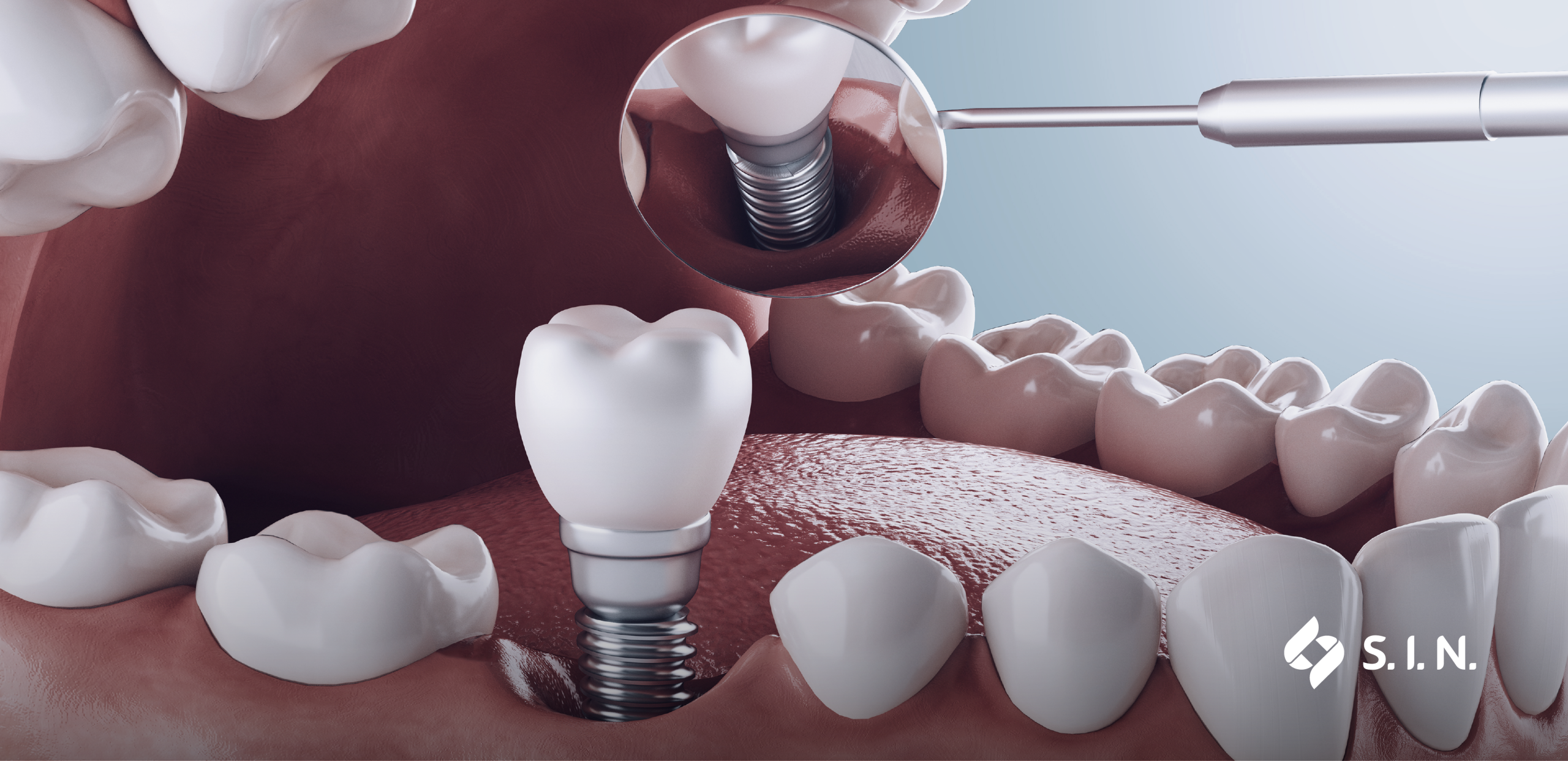
The continuous search by Patients for speed, comfort, and aesthetics has transformed daily practice in dental clinics. Today, rapid results are expected, and the immediate loading procedure emerges as one of the most desired solutions in modern implantology.
However, speed should not override physiology. Offering the delivery of a temporary prosthesis on the same day as surgery is not merely an aesthetic choice, but a complex clinical decision that requires an accurate diagnosis, assertive planning, and technical rigor in execution.
Understand below the situations in which this procedure can be safely included in your planning, the essential evaluation criteria, and how to follow the immediate loading protocol to ensure predictability in every case.
Clinical criteria for recommending an immediate load protocol
The success of an immediate load protocol is directly linked to controlling micromotion at the surgical site. For osseointegration to occur without fibrous tissue formation, implant displacement must be kept at sub-physiological levels.
To guarantee this stability, evaluating four clinical pillars is essential:
- Significant primary stability: this is the determining factor. The initial mechanical stability of the implant must reach adequate surgical torque — based on literature, S.I.N. recommends 45 to 80 N.cm — or present high stability quotients measured by resonance frequency analysis (high ISQ);
- Bone density and volume: bone density (predominantly Types I, II, and III) and sufficient three-dimensional volume ensure the retention required to withstand the initial load without the need for complex simultaneous grafts in the anchorage area;
- Occlusal conditions and absence of parafunction: the Patient must present a stable occlusal pattern. Individuals with unmanaged bruxism or clenching require extra caution or temporary contraindication until their habits are controlled;
- Periodontal and systemic health: the recipient site must be completely free of active infections, and the Patient must demonstrate controlled overall health conditions for a proper healing process.
See also: S.I.N. Plus HAnano Surface: the science behind accelerated osseointegration and clinical success
Patient assessment and reverse planning
Choosing immediate loading requires reversing the traditional chain of thought: the final position of the prosthesis determines where and how the implant will be placed. This reverse planning minimizes aesthetic failures and distributes masticatory forces more evenly.
The use of Cone Beam Computed Tomography (CBCT) is indispensable in these cases, as the exam results help map bone density in 3D. Furthermore, when combined with intraoral scanning and guided surgery, the precision of three-dimensional placement increases significantly, avoiding excessive forces during provisional rehabilitation.
Another crucial point is selecting the macrogeometry of the implant. Implants featuring a tapered design, progressive threads, and advanced surface treatments facilitate achieving high primary stability, making the immediate loading protocol safer and more predictable.
Step-by-step immediate loading protocol
In practice, executing the immediate loading protocol requires fine-tuned planning between the surgical team, the prosthetic vision, and the laboratory. Therefore, the workflow follows a few well-defined stages:
- Anchorage and torque check: implant placement must achieve the minimum safety torque based on scientific evidence;
- Prosthetic component installation: the ideal intermediate component—such as multi-unit abutments or specific abutments — is preferably installed during the same surgical act to preserve the biological width.;
- Impression/scanning: impression making or intraoral scanning of the component is performed to fabricate the provisional restoration or adapt a pre-fabricated prosthesis;
- Passive occlusal adjustment: For single-tooth cases, ensure the temporary restoration does not contact opposing teeth. For multiple-unit cases, the protocol dictates they should make contact, but lightly and evenly, to prevent localized overload;
- Postoperative guidance: the Patient must strictly follow a soft diet during the osseointegration period — approximately 60 to 90 days — to avoid putting excess force on the prosthesis.
But is immediate load protocol safe?
Yes, immediate load protocol is safe. Studies, such as those from CESPU, show that the success rates of this procedure are equivalent to those of the conventional delayed loading protocol, provided that selection criteria and execution are strictly respected.
In other words, the success of your Patient’s treatment depends on discipline and communication: immediate loading should not be a guarantee, but rather a viable option that you confirm intraoperatively once ideal primary stability is achieved.
Remember: working with reliable implant systems and micrometrically precise components drastically reduces the risk of complications and ensures long-term results. Moreover, by mastering the diagnosis and techniques of immediate loading, you expand your practice’s possibilities, enhance the Patient experience, and deliver functional and aesthetic results with high predictability.

Keep your clinical practice up to date!
Implantology evolves rapidly, and staying attentive to new techniques, research, and technologies is the secret to offering increasingly predictable treatments.
Follow the S.I.N. blog, subscribe to our newsletter, and stay up to date with the main news and trends transforming clinical practice!
Recapping what we learned in this article:
1. What are the essential clinical criteria for recommending immediate loading in treatment planning?
The determining factor is achieving significant primary stability (torque above 45 N.cm and/or high ISQ values). In addition, having good bone density and volume, absence of unmanaged parafunctions (such as bruxism), and fully controlled periodontal and systemic health are required.
2. What is the importance of reverse planning and 3D imaging in case predictability?
Reverse planning ensures that the final prosthetic position determines implant placement, resulting in better masticatory force distribution. Computed Tomography (CBCT), combined with intraoral scanning, allows for three-dimensional mapping of the bone structure, increasing surgical precision and reducing aesthetic errors.
3. How should occlusal adjustment be performed on an immediate load provisional prosthesis?
In single-unit cases, the provisional piece must not touch opposing teeth during biting or lateral movements. In multiple-unit protocols, contact points should be light and evenly distributed to prevent focal overloading.
4. What does scientific literature say about whether immediate load implants are safe?
Research and clinical studies (such as those from CESPU) prove that immediate load implants are safe and yield success rates equivalent to the traditional delayed loading protocol, provided that indication criteria and primary stability are strictly respected.
5. Why should the final decision regarding immediate loading be made intraoperatively?
Immediate loading cannot be an unrestricted promise made to the Patient prior to surgery. Technical confirmation only happens at the moment of implant installation by measuring whether the insertion torque meets the required safety threshold to support an immediate load.